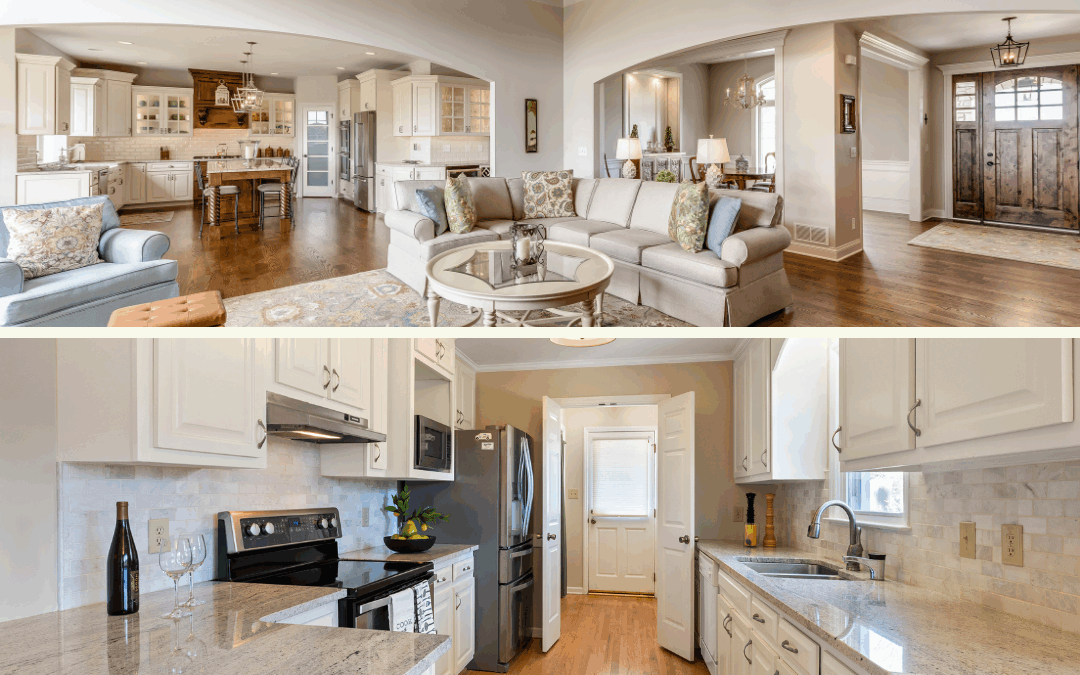
Choosing how your home should flow is one of the biggest decisions you’ll make during a remodel. For years, open floor plans have dominated modern design. They create bright, airy spaces and make homes feel larger and more connected. But lately, defined spaces are making a comeback as homeowners look for more privacy, noise control, and purpose-driven rooms.
So which layout is right for you? Let’s walk through the pros and cons so you can make a choice that fits your home and lifestyle.
Why Homeowners Still Love Open Floor Plans
Open layouts remove walls to create one continuous space—usually combining the kitchen, dining, and living areas. If you enjoy hosting or want a lighter, more social layout, this approach has real benefits.
What people love most:
More natural light
With fewer walls blocking windows, sunlight can move freely throughout your main level.
Better flow for entertaining
Guests can mingle easily, and the cook isn’t isolated from the rest of the group.
Family-friendly sightlines
Parents can prep dinner while keeping an eye on kids in the living area.
Flexible furniture layouts
You can adapt large, open spaces as your needs change.
But open layouts also come with trade-offs. Noise carries. Cooking smells linger. And when everything’s visible, clutter is harder to hide.
Why Defined Spaces Are Gaining Attention Again
After years of open-concept living, many homeowners now want rooms with clearer boundaries. Maybe it’s working from home, juggling kids’ schedules, or simply wanting more coziness. Defined spaces solve a few common issues.
Here’s why they’re trending again:
Better noise control
Walls make it easier to separate quiet zones from busy ones.
More privacy
Whether you’re on a Zoom call or just need some breathing room, dedicated spaces come in handy.
Cozy, intentional design
Rooms with their own purpose naturally feel more inviting.
Smarter heating and cooling
Enclosed rooms can be more energy-efficient, especially in older homes.
The downside? Some homes can feel closed off or darker if there aren’t enough windows—and smaller rooms often limit how you arrange furniture.
How to Decide What Works for You
Before you choose sides, think about how you actually use your home.
Ask yourself:
-
Do you host large gatherings often, or do you prefer smaller, more private moments?
-
Do you need quiet zones for work, homework, or hobbies?
-
Do you prefer a bright, airy feel or cozy, intimate rooms?
-
Is storage a struggle? (Defined spaces often help hide the day-to-day mess.)
-
Are you planning a long-term remodel or just updating part of your layout?
You don’t have to go all-in on one layout, either. Many homeowners blend both approaches—open living areas paired with a defined office, reading nook, mudroom, or playroom.
Hybrid Layouts: The Best of Both Worlds
If you love the openness but want some structure, there are smart ways to balance the two:
-
Partial walls or columns for subtle separation
-
Glass partitions to keep the light while adding sound control
-
Built-in shelving that defines an area without closing it off
-
Cased openings instead of full walls
-
Sliding or pocket doors to transition between open and private spaces
These solutions add definition without sacrificing flow.
Which Layout Will Fit Your Lifestyle?
There’s no one right answer—just the layout that supports how you live every day. Open plans work well for active, social households that want seamless connection. Defined spaces suit families who want more peace, privacy, and purposeful rooms. Many homes benefit from a little of both.
If you’re ready to rethink your layout, we can help you explore your options and design a space that fits the way you live now (and in the years ahead).