
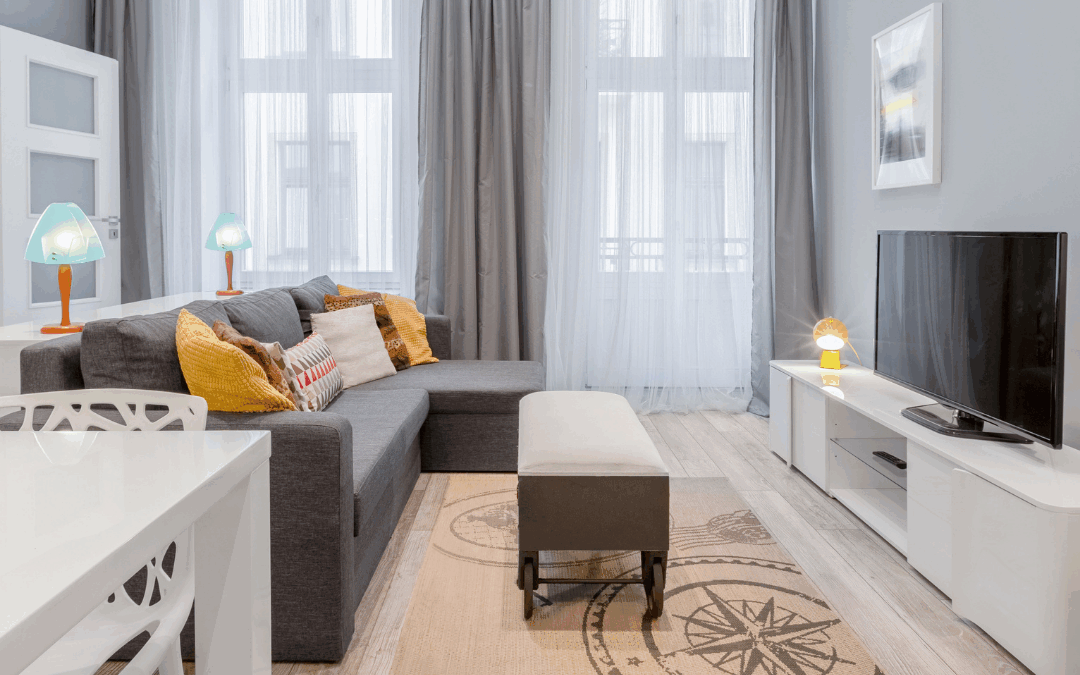
Living in a small space doesn’t mean living small. With the right approach, even a modest studio apartment or compact guest room can work harder, look better, and feel more spacious than you’d expect.
Here’s how to make every square foot count—without sacrificing comfort or style. It’s time to maximize your small space.
1. Rethink Your Layout
Start by questioning the default floor plan. Just because the previous tenant had their bed against one wall doesn’t mean you have to. Float furniture away from walls when it creates a better flow. Put your desk by the window for light, not in a shadowy corner. Don’t be afraid to rearrange until the room works for how you live.
2. Go Vertical
If you’re not using your wall space, you’re missing out. Think:
-
Wall-mounted shelves instead of bookcases
-
Hooks and pegboards in the kitchen or entryway
-
Tall cabinets or closed storage that go up to the ceiling
You’re not just gaining storage—you’re opening up the floor, which makes the space feel bigger instantly.
3. Multipurpose or Nothing
Every piece of furniture should earn its place. A coffee table with storage. A sleeper sofa. An ottoman that holds blankets. A folding table that doubles as a desk or dining surface.
Look for flexibility. If it only does one thing and takes up space all day, it better be doing it really well.
4. Use Light (and Color) Strategically
Small rooms don’t have to be white, but they do need to be bright. Natural light is ideal—use sheer curtains or none at all. If you lack sunlight, layer your lighting: ceiling light, task lamp, and ambient light (like wall sconces or LED strips).
Stick to a lighter or neutral palette for walls and larger items, and bring in color through accents. This keeps the room from feeling crowded or busy.
5. Declutter. Then Edit Again.
No amount of design can fix a space that’s overloaded with stuff. Take the time to pare down. Be honest about what you use regularly and what’s just taking up room. Then go through it again. The smaller the space, the more intentional you have to be about what stays.
6. Think Beyond Furniture
Sliding doors take less space than swinging ones. Mirrors can visually double the size of a room. Even something as simple as leggy furniture (instead of pieces that go all the way to the floor) can help the eye travel and create a sense of openness.
And don’t underestimate a clean floor. The less clutter you have underfoot, the larger the room will feel.
7. Customize for How You Live
If you never eat at a table, skip the full dining set. If you work from home, invest in a great chair instead of a second armchair no one sits in. Your space should reflect your actual lifestyle—not some idea of what a “complete” room should include.
In Summary
Maximizing a small space isn’t about cramming more in—it’s about making smarter choices. Every inch should serve a purpose, whether that’s function, storage, or style. The result? A space that feels bigger, works harder, and actually suits your life.